
Buyers
Manufactured vs. Modular Homes in Spokane: What Buyers Actually Need to Know
By Billy Deese — Owner / Designated Broker
Published Updated
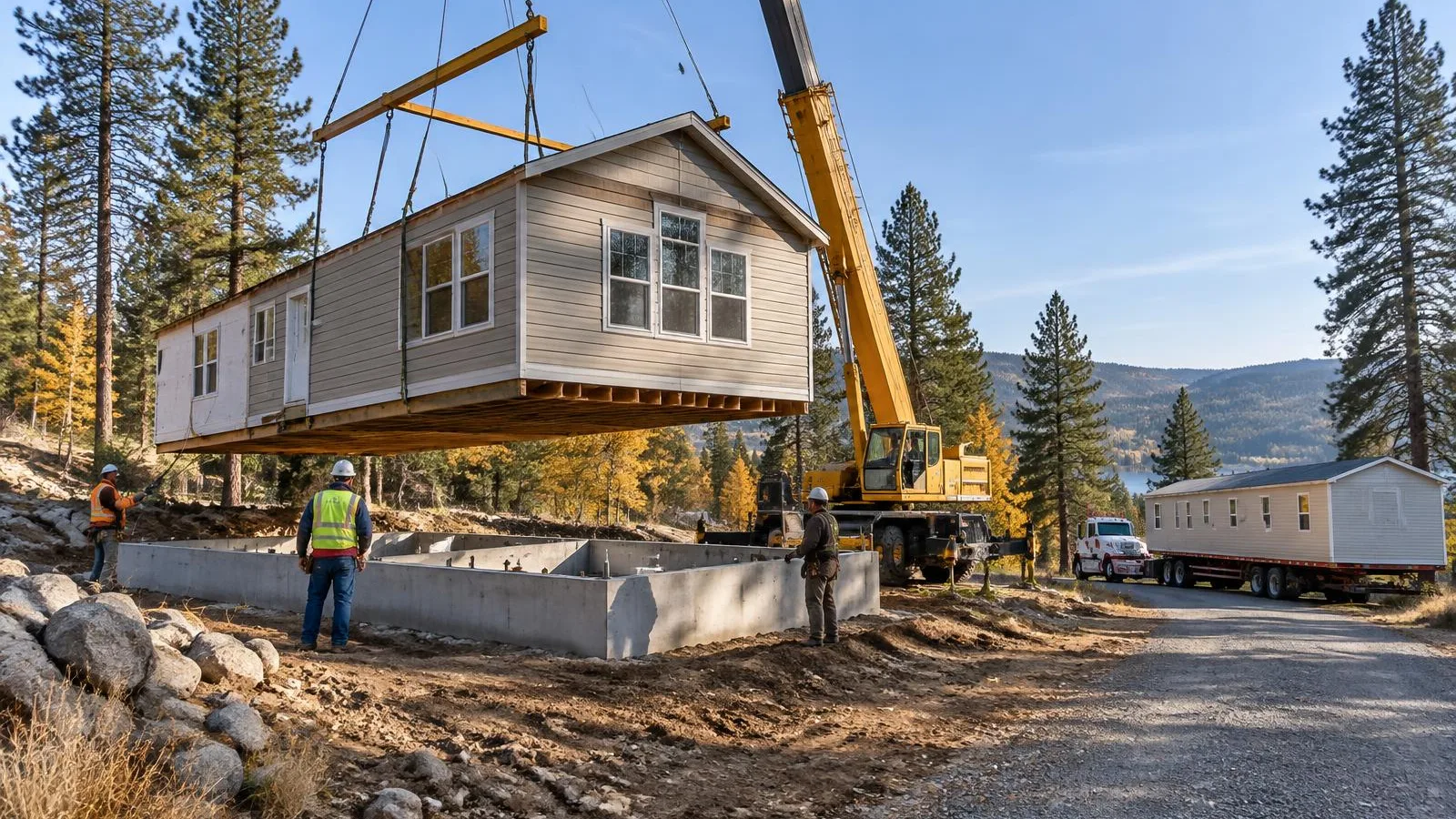
Start by verifying how the home was built and classified. For a Spokane-area purchase, review the land arrangement, foundation, financing, and records—not just the label in the listing.
Start with the construction category, not the kitchen finishes. Washington defines manufactured homes by federal construction standards and separately defines other qualifying factory-built housing. Those are different categories, not interchangeable names.
For a Spokane-area buyer, my advice is to separate the decision into the home itself, the ground underneath it, and the paperwork supporting the purchase. Like the floor plan? Good. Now ask your lender, inspector, and closing team to review the actual property rather than work from a listing description.
The countertop is not the classification.
The plain-English difference
A manufactured home is a single-family dwelling required to be built under federal manufactured-housing construction and safety standards. Washington’s definition ties the home directly to those federal standards.
Washington separately defines factory-built housing to include a qualifying structure when the structure—or any room within it—is entirely or substantially prefabricated or assembled away from the building site, excluding manufactured and mobile homes. For factory-built housing and factory-built commercial structures, the state defines installation as assembly at the building site.
When a home is described as modular, ask the building department to confirm its construction category, whether it falls within Washington’s factory-built housing definition, and which state or local construction standards apply. Do not settle for “it was built in a factory” as the entire answer.
Request the construction records and identifying information. For a manufactured or mobile home, Washington Labor & Industries points owners to its label-identification guidance to help identify homes subject to its alteration permitting and inspection process.
Why different standards mean different questions
Keep construction standards separate from placement requirements. Washington law directs cities and towns to regulate the siting of federally compliant manufactured homes in the same manner as other homes, while allowing specified conditions and exceptions. That is not a blanket approval for a particular site.
The same law allows cities and towns, subject to its exceptions, to require a manufacturer-specified permanent foundation and a concrete or approved concrete-product enclosure between the home and the ground. Subject to those exceptions, it also allows requirements for local design standards applicable to other homes in the neighborhood.
Those are permissions in state law—not a statement that every Spokane-area jurisdiction has adopted every available condition.
For an existing home, ask the responsible building office to explain the records for that address. For a proposed installation, ask it to review the proposed home and parcel together. Do not carry an answer about a city property over to a different location without checking.
Land: what exactly are you buying?
Ask the seller and your agent to identify exactly what is included. Is the ground part of the purchase, or are you considering the home with a separate arrangement for its location? Request the supporting documents rather than relying on a verbal explanation.
If someone else owns the ground, ask for the full written arrangement and review it with the appropriate professionals. Focus on ongoing expenses, responsibilities, approval steps, and any questions about continued use of the site. Avoid deciding whether the arrangement works for you from the home’s asking price alone.
Also ask your lender and closing team how they classify the home and land for this transaction. Have them confirm how the home is documented and identify anything that needs further review. Do not use “it looks permanent” as your answer.
Considering a separate land purchase? Use our guide to financing vacant land in Spokane to prepare questions for your lender. Ask them to review the land purchase and home plan together.
Foundation, placement, and the site
Treat the foundation as a document-and-condition question, not a curb-appeal question. Ask for installation records, foundation information, and the manufacturer’s instructions where available. Have your inspector identify concerns and recommend any additional specialist review.
For a home you plan to place, request a site-specific outline from the building office and installation professionals. Ask them to address the proposed location, foundation, delivery access, utility connections, drainage, and the work included in their scope. Request written clarification of anything excluded.
For an existing home, ask for the placement and inspection history. Have the appropriate office explain missing or unclear records rather than drawing your own conclusion from an empty file.
Washington L&I says manufactured-home remodeling or repairs may need permits depending on the work. Some alterations also require plans submitted for approval. So ask specifically about additions and changes, not just the original installation.
Do not read federal construction standards as an instruction to skip local review. Get an answer for the actual project.
Financing: have the lender review the property
Before choosing a financing approach, send your lender the address, home classification, available identifying information, land arrangement, and foundation documents. Ask what else they need to evaluate the property—not just your finances.
Keep the questions direct: Can you finance this particular home as presented? How are you evaluating the home and land? What documentation do you need about the foundation or installation? What remains unresolved? Ask for an explanation in plain English rather than accepting a general “we finance manufactured homes.”
For a home described as modular, request the same property-specific review. Avoid assuming that an answer about another factory-built home settles the question for this one.
If you are buying a home to install, ask how the lender would handle the land, home, delivery, and site work in your proposed purchase. Compare the complete written proposals and ask about anything you do not understand.
For help organizing the conversation, see what a mortgage lender needs from you.
Insurance deserves its own conversation
Ask an insurance professional to quote the actual home, using its verified construction type and property details. Provide information about the foundation, location, additions, and intended use rather than requesting a generic homeowners quote.
Have them explain the proposed coverage, exclusions, deductibles, and any unanswered questions about the property. If the home has been remodeled, ask what information they want about that work.
For a proposed delivery and installation, ask who should address protection during transport and setup. Request clarification about where each proposed coverage arrangement begins and ends. Keep this discussion separate from the lender’s financing review, and ask both professionals to flag anything they still need from you.
Inspection: review condition and the work history
Choose an inspector with experience evaluating the type of home you are considering. Ask them to explain their scope, what they will not evaluate, and when they would recommend a specialist.
Request attention to the foundation or support system, connections between sections where applicable, moisture concerns, and visible additions or alterations. Ask the inspector to distinguish observed condition concerns from questions that should go to a building official or another professional.
For manufactured homes, L&I offers a Homeowner Requested Inspection to help a purchaser determine needed permits or verify whether a nearby structure is self-supporting. L&I explicitly says that this inspection cannot approve alterations. Do not ask it to do a job the agency says it does not do.
Ask L&I whether that service fits any unresolved concerns about the home. Separately, request the relevant alteration records and inspection results from the seller.
For a home described as modular, ask the responsible building office which construction and installation records to review. Keep those questions alongside—not buried inside—your condition-inspection conversation. Our overview of what happens during a home inspection is a useful starting point for preparing your questions.
Title, taxes, and resale: verify rather than assume
Ask the closing team to explain how ownership of the home and any included land is documented, what records need reconciliation, and what information they still need from the seller. Request a clear explanation of the home’s recorded status rather than trying to infer it from the listing.
Have the appropriate local offices review the assessment records associated with the proposed purchase. Ask them to explain how the home and land appear in their records and what questions your closing team should address. Request a property-specific explanation rather than relying on the seller’s description.
For resale planning, ask your agent to review genuinely comparable properties, with attention to construction category, land arrangement, condition, and location. Avoid building your decision around a promise that either type of home will automatically perform better.
Keep copies of the construction information, installation records, alteration approvals, and inspection reports you obtain. Consider the future buyer’s questions while you have the current seller available to help answer them.
Before making an offer in Spokane
My recommendation is to work through a property-specific review before deciding how to proceed:
Confirm the category. Ask for documentation identifying the home and the standards under which it was built. Resolve conflicting descriptions with the appropriate building office.
Clarify the ground. Identify what is included in the purchase and request the full written details of any separate arrangement for the site.
Review the installation. Ask about the foundation, placement history, additions, and unresolved work. For a proposed placement, get a site-specific review rather than a general assurance.
Bring in the lender and insurer. Request feedback on the actual property and ask each professional to identify open questions.
Organize the records. Have the closing team and appropriate local offices review ownership documentation and assessment information. Ask your agent to help you track missing answers.
Plan the inspection. Discuss the appropriate scope and specialist needs. Before signing, ask your agent to walk you through the proposed purchase documents; do not treat this checklist as a substitute for that review.
Choose the property, not just the label
Do not reject a manufactured home because of the name, and do not give a modular home a free pass because of its label. Evaluate the particular home, site, condition, documentation, and proposed financing together.
If you are comparing manufactured and modular homes around Spokane, reach out to Billy Deese at Deese Real Estate with your questions. We can help you organize what to verify before you move forward.
Related guides
More on buying a home.
- How Much House Can I Afford in Spokane?How much house you can afford isn't just about the price a lender approves. Your payment, interest rate, taxes, insurance, debts, down payment, and the life you want to live after closing all matter. Here's how to think about a comfortable home-buying budget before you start shopping.
- What Is Earnest Money and Can I Lose It?Earnest money is not a fee and not automatically refundable. Here is what it does, who holds it, how contingencies and deadlines control it, and what happens when the two sides disagree.
- What Happens on Closing Day When You Buy a House?Signing, funding, and recording are three different events. Here is how closing day actually unfolds for a buyer, when the house becomes yours, and how to protect your money on the way there.
- What Is a Final Walkthrough and What Should I Look For?The walkthrough is not a second inspection and not a renegotiation. Here is what it is actually for, when it happens, what to check, and what your options are if something is wrong.
Start from the top of this topic: How Much House Can I Afford in Spokane?