
Buyers
How Do You Finance Vacant Land in Spokane? What Buyers Need to Know
By Billy Deese — Owner / Designated Broker
Published Updated
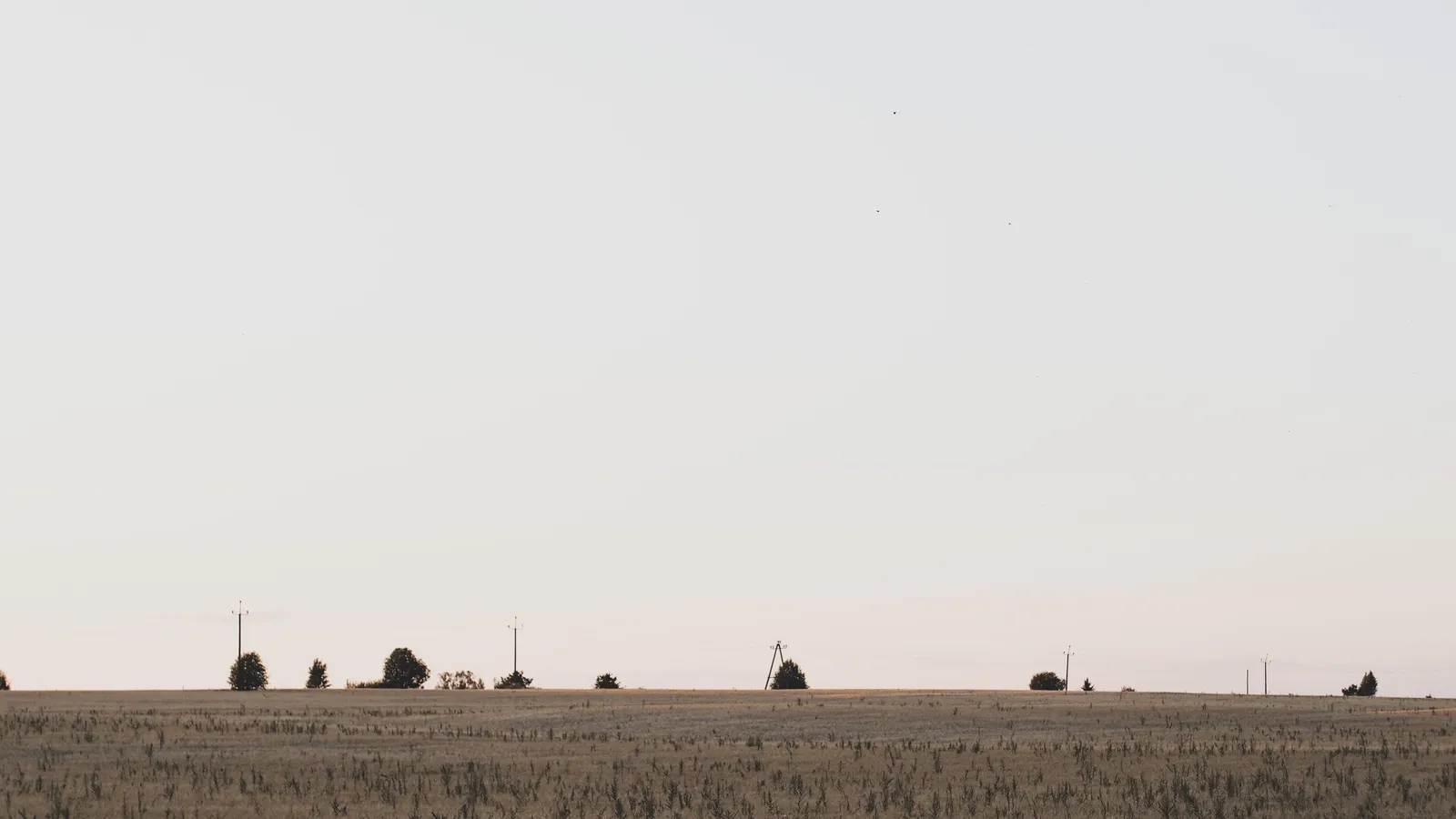
Vacant land can be financed, but it does not work exactly like a normal home mortgage. Learn how land loans, construction financing, owner financing, and Spokane-area buildability due diligence fit together before you buy.
You find five acres outside Spokane with a view, a few pine trees, and enough room for the house and shop you have been picturing.
The price looks manageable.
Then you call your mortgage lender and learn something important:
Buying land is not the same as buying a house.
Vacant land can absolutely be financed. But the loan you need, the amount of cash you may need, and what a lender wants to see depend heavily on the property and what you plan to do with it.
If your plan is to buy land in Spokane County and build later—or buy the lot and start construction right away—here is the practical version of how the financing fits together.
The short answer
There are several common ways people finance vacant land:
- a standalone land or lot loan
- a construction loan
- a construction-to-permanent loan
- seller or owner financing
- cash or another source of funds
Which one makes sense depends on whether the land is improved, whether you are ready to build, whether you already own the lot, what utilities and access exist, and what the lender thinks the finished project will be worth.
And one warning before we get into the loan options:
Financing approval does not mean the land is buildable.
A lender can be comfortable lending on a parcel that still has zoning, access, water, septic, utility, critical-area, or permitting issues that make your actual plan difficult or impossible.
Those are two separate investigations. You need both.
Option 1: A standalone land loan
A land loan is the most straightforward concept: you borrow money to buy the dirt.
These loans are not necessarily structured like a normal 30-year mortgage on an existing house. Terms vary by lender and by the property.
One current example is BECU's land-loan program, which distinguishes between improved and unimproved land. Its current description of improved land includes water and electricity plus sewer or approved septic and well systems, while unimproved land may be missing some of those improvements.
That is not a universal definition every lender uses. It is a good illustration of why the condition of the land matters.
From the lender's perspective, a parcel with legal access, usable utilities, and a clear path to construction is a different piece of collateral than acreage with no road, no power, no water source, and no verified building site.
If you are buying now and do not plan to build immediately, a land loan may be worth discussing with lenders that actually make them.
Ask about the required down payment, loan term, acreage limits, whether the land must be improved, whether there is a balloon payment, and how the loan would work with future construction financing.
Do not assume the lender who gave you a great conventional mortgage on your current house is also the best—or even an available—source for a land loan.
Option 2: Construction-to-permanent financing
If you are buying land because you are ready to build, construction-to-permanent financing may make more sense than financing the land separately.
The basic idea is that the financing covers the construction phase and ultimately becomes, or is replaced by, the long-term mortgage on the completed home.
There are different structures.
Fannie Mae's current guidance recognizes both one-closing and two-closing construction-to-permanent transactions.
With a single-close structure, the construction financing and permanent mortgage are closed together. Under Fannie Mae's current rules, a purchase transaction can include the lot and construction when the borrower does not already own the lot at the first construction advance. If the borrower already owns the lot, the transaction is structured differently. (Fannie Mae single-close guidance)
With a two-close structure, there is an interim construction loan and then a separate permanent mortgage after construction.
What lenders actually offer can vary. For example, BECU currently advertises one-time-close construction financing.
This is where you want to talk to a lender who regularly does construction financing—not just someone who technically has a product on a rate sheet.
Construction lending introduces questions that do not exist when you buy a finished house:
Who is the builder? Are plans and specifications complete? What is the construction budget? How are draws handled? What happens if costs run over? How long can construction take? How is the finished value determined? Can the lot purchase be included? If you already own the lot, can your equity in it help the financing structure?
Those are lender-specific questions. Get the answers before you structure the land purchase around assumptions.
Option 3: Owner financing
Sometimes the seller of the land is willing to finance the purchase.
Instead of borrowing all of the purchase money from a bank or credit union, you make payments to the seller under an agreed structure.
That can be useful when conventional land financing is difficult, but "owner financing" is not automatically easy financing.
The agreement still needs to answer important questions: interest rate, down payment, loan term, balloon payment, prepayment, default remedies, and what lien the seller will hold.
If your ultimate plan is to build, ask another question before you agree to anything:
Will this structure work with the construction financing I expect to need later?
A construction lender may have requirements about lien position and how the land debt is paid off or handled.
This is a situation where the financing structure and the real estate contract need to work together. It is also a good time to involve the appropriate legal and lending professionals instead of building a deal from an internet template.
The loan is only half of the problem
This is the part I would want every Spokane land buyer to understand before getting emotionally attached to a parcel.
A beautiful piece of land is not automatically a buildable piece of land.
Before you treat the financing as the hard part, figure out what you are actually buying.
First: which jurisdiction is the property in?
A Spokane mailing address does not necessarily mean the property is inside the City of Spokane.
The City of Spokane's residential permit page specifically warns about this and points property owners to Spokane County's SCOUT tools to determine jurisdiction and find parcel information.
That matters because the City of Spokane, Spokane County, Spokane Valley, Liberty Lake, and other jurisdictions can have different zoning, permitting, utility, and development requirements.
Start with the parcel, not the mailing address.
Check zoning and minimum lot requirements
Spokane County says minimum lot sizes depend on the property's zoning designation and can vary dramatically. (Spokane County building and planning FAQ)
Do not look at five acres and assume:
"Five acres is plenty. I can obviously build a house."
Maybe.
But you need to know the zoning, permitted uses, setbacks, parcel history, and other development standards that apply to that specific property.
Look for critical-area issues
Spokane County regulates critical areas including wetlands, fish and wildlife habitat, geologically hazardous areas, critical aquifer recharge areas, and frequently flooded areas. The county is also working through a Critical Areas Ordinance update in 2026. (Spokane County Critical Areas Ordinance)
That does not mean a parcel with a mapped critical area cannot be used.
It means the existence and location of those areas may affect where or how you can develop it.
This is exactly the kind of thing you want to know before your feasibility period expires.
Figure out water
If public water is available, determine the cost and process for connection.
If the property will rely on a private well, the answer can be more complicated than "we will just drill one."
Spokane County has specific building-permit rules for properties using permit-exempt wells, and requirements can depend on the watershed. (Spokane County building permits and water supply)
The Spokane Regional Health District is also involved in drinking-water and onsite-sewage issues for land development.
Do not assume the neighboring property having a well proves your parcel has an adequate legal and practical water supply.
Sewer or septic?
If public sewer is available, find out where it is, whether there is a usable connection, and what connection charges or extension work may be required.
Spokane County has parcel-specific sewer information and permit processes. (Spokane County sewer connections)
If the property needs an onsite septic system, feasibility depends on the site and applicable health requirements.
A piece of land can look perfect from the road and still require substantial work—or a different building plan—because of wastewater constraints.
Utilities and access matter too
Ask the boring questions early.
Is power at the property line? What will it cost to bring it to the proposed building site? Is there legal access? Is the road public, private, or shared? Who maintains it? Is there an easement? Can construction equipment actually reach the building site? What does snow removal look like in January?
None of those questions is particularly glamorous.
They are considerably more fun to answer before closing than after.
Financing should follow the plan
Here is the mistake I would try hardest to avoid:
Buying the land first and figuring out the rest later because the parcel feels like a good deal.
Sometimes that works.
Sometimes the buyer later discovers that the lender wants a bigger down payment than expected, the well is more complicated, the septic system needs a different location, the driveway costs a fortune, the building site is constrained, or the builder's estimate makes the entire project unaffordable.
A better order is:
Understand the parcel.
Understand what you want to build.
Get a realistic site-development and construction picture.
Then talk with lenders about the financing structure that fits that plan.
You do not need every final cabinet selection before buying a lot.
You do need enough information to know that the land, financing, and project belong in the same universe.
Questions I would ask the lender before making an offer
If I were financing land in Spokane, I would want clear answers to these questions before removing financing or feasibility protections:
- Do you make loans on vacant land like this?
- How do you classify this parcel: improved, unimproved, or something else?
- What down payment and reserves would this particular loan require?
- What is the term, and is there a balloon payment?
- Are there acreage or property-type limits?
- Does the property need legal access or specific utilities before closing?
- If I plan to build, should I use a land loan or construction-to-permanent loan instead?
- Can the land purchase be included in the construction loan?
- If I buy the land first, how will that debt or equity be treated later?
- What plans, builder documents, bids, permits, or appraisal will you need before construction financing?
- What could make this property ineligible for your loan?
Then I would ask the planning and development people a completely different set of questions about whether the project itself works.
That separation matters.
The bottom line
Yes, you can finance vacant land in Spokane.
But there is no single "vacant land mortgage."
The right structure depends on the land, the timing of your build, the improvements already in place, the lender, and your overall project.
A standalone land loan may make sense if you want to buy now and build later.
Construction-to-permanent financing may make more sense if you are ready to build.
Owner financing can sometimes solve a problem, but it needs to be structured carefully—especially if future construction financing is part of the plan.
And none of those financing options replaces land due diligence.
Before you buy, understand the zoning, jurisdiction, access, water, sewer or septic, utilities, critical areas, likely site-development costs, and the basic feasibility of what you want to build.
Because the goal is not just to get approved to buy five acres.
The goal is to buy five acres that actually works for what you want to do with it.
If you are looking at land in Spokane or Spokane County, we can help you work through the real-estate side, identify the questions that need answers, and coordinate with the lenders and other professionals involved.
We make it easy.
This article is for general educational purposes and is not lending, legal, tax, engineering, land-use, or construction advice. Loan programs, rates, development rules, utility availability, and permit requirements change and vary by borrower and parcel. Verify current requirements with the appropriate lender, jurisdiction, and licensed professionals before relying on them.
Related guides
More on buying a home.
- How Much House Can I Afford in Spokane?How much house you can afford isn't just about the price a lender approves. Your payment, interest rate, taxes, insurance, debts, down payment, and the life you want to live after closing all matter. Here's how to think about a comfortable home-buying budget before you start shopping.
- What Happens on Closing Day When You Buy a House?Signing, funding, and recording are three different events. Here is how closing day actually unfolds for a buyer, when the house becomes yours, and how to protect your money on the way there.
- What Is a Final Walkthrough and What Should I Look For?The walkthrough is not a second inspection and not a renegotiation. Here is what it is actually for, when it happens, what to check, and what your options are if something is wrong.
- How Do I Make an Offer on a House?Price is one term out of many. Here is what actually goes into an offer, earnest money, financing, contingencies, dates, included items, and why the highest number does not always win.
Start from the top of this topic: How Much House Can I Afford in Spokane?