
Sellers
Why Is My Home Value Estimate Such a Big Range?
By Billy Deese — Owner / Designated Broker
Published Updated
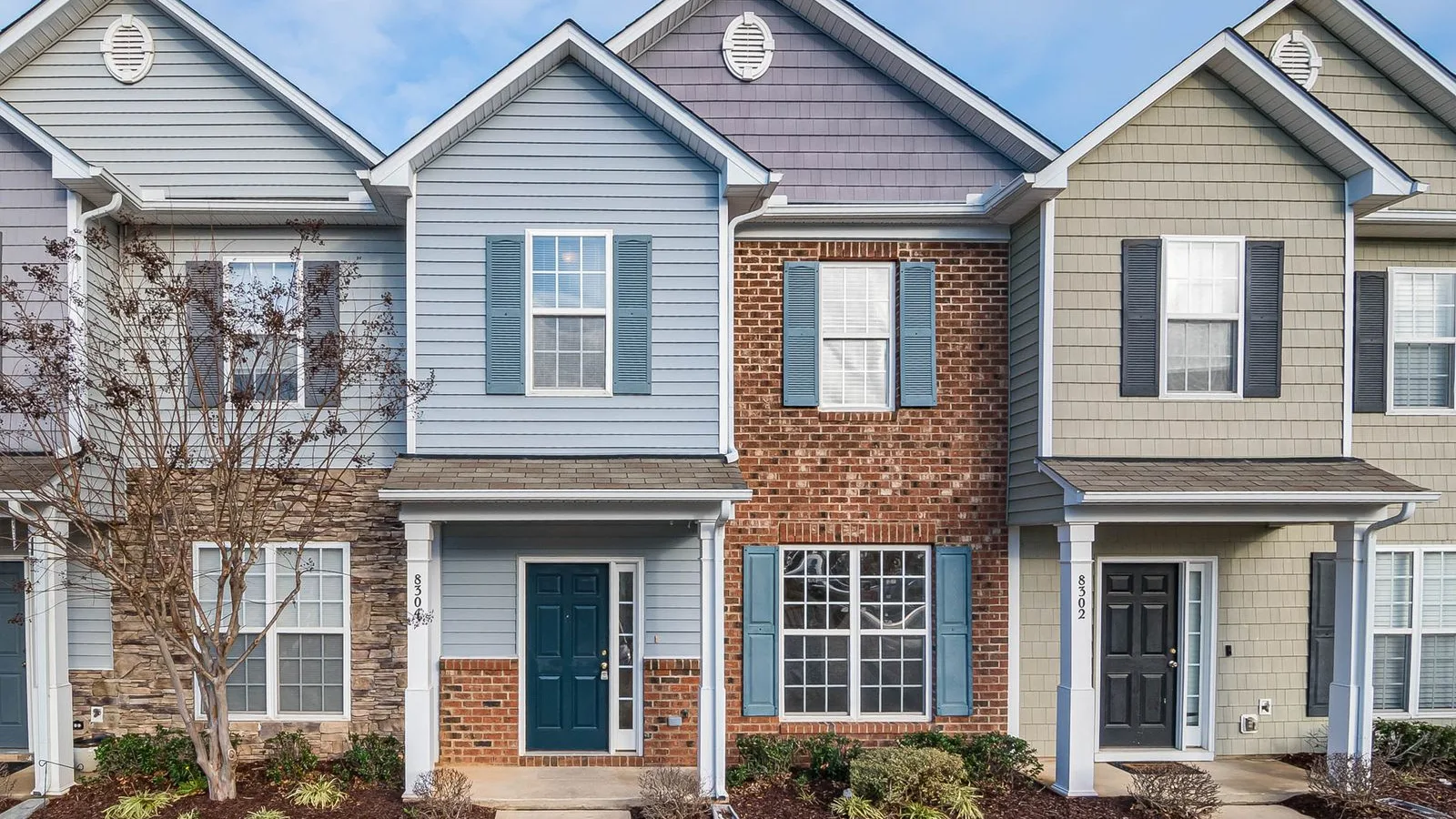
Wondering why an online home value estimate can show a huge range? Learn how condition, micro-location, comparable sales and buyer appeal affect the number.
You type in your address, wait a second, and get a number.
Then right underneath it you see something like:
Estimated value: $460,000 Estimated range: $390,000–$530,000
And your first reaction is completely fair:
"That's a $140,000 range. How is that supposed to help me?"
The short answer is that an automated home-value estimate is trying to answer a question with incomplete information.
It can see a lot.
It cannot see everything.
And the wider the range, the more uncertainty there is around the estimate.
That does not mean the estimate is useless. It means you should treat the middle number as a starting point, not a promise.
The Computer Knows the Data. It Hasn't Walked Through Your Front Door.
Automated valuation models use property records and nearby comparable listings to estimate value.
They can usually see things such as:
- Property type
- Bedrooms and bathrooms
- Approximate square footage
- Lot size
- Year built
- Public sale history
- Tax records
- General location
- Nearby comparable properties
- Recent listing activity
Our valuation provider also looks for similar nearby properties based on things like property type, size, attributes and location, then uses those comparable properties to calculate an estimate.
That is a useful amount of information.
But it is still data on a screen.
An algorithm can see the numbers. It cannot walk through your front door.
Condition Can Change the Number Fast
Imagine two houses on the same street.
Same general size. Same number of bedrooms. Similar lot. Built around the same time.
One has:
- A newer roof
- Updated electrical
- A remodeled kitchen
- New flooring
- Fresh paint
- Clean landscaping
- A finished basement that feels like part of the house
The other has:
- A roof near the end of its life
- Original kitchen cabinets
- Worn flooring
- Deferred maintenance
- A basement that smells damp
- Ten years of projects the next owner will inherit
On paper, those houses can look surprisingly similar.
To a buyer standing in the living room, they are not similar at all.
That difference in condition can move the real-world selling price substantially.
Public records also do not always know about every improvement you have made. Even when a permit or property record reflects an addition or remodel, it may not tell the valuation model whether the work is beautiful, average or badly done.
That is one reason an automated estimate may need a wide range.
Location Is More Specific Than a ZIP Code
An automated model absolutely considers location.
But "location" gets very specific in real estate.
Two houses can be in the same neighborhood and still have different buyer appeal.
One might sit on a quiet interior street.
Another might back to a busy road.
One might have a territorial or water view.
Another might look directly at a commercial building.
One might have easy parking, a private backyard and great natural light.
Another might have a steep driveway, awkward access or a neighbor's garage three feet from the kitchen window.
School boundaries, traffic, noise, privacy, walkability, views and nearby land uses can all affect how buyers react.
We sometimes call this micro-location.
The closer you get to the individual property, the more those little details can matter.
"Sellability" Matters More Than People Think
Two houses can have very similar statistics and still feel completely different to buyers.
That is sellability.
It is not one specific data point.
It is the combination of things that make a home easy or difficult for buyers to say yes to.
Examples include:
- A functional floor plan
- Good natural light
- Bedroom placement
- Main-floor living
- Parking
- Storage
- Yard usability
- Curb appeal
- Noise
- Smell
- Privacy
- Stairs
- Ceiling height
- Awkward additions
- An unusual layout
- How well the home photographs
- How much immediate work a buyer feels the house needs
A four-bedroom house where one bedroom only works by walking through another bedroom may not compete like a normal four-bedroom house.
A beautifully updated home with an odd layout may still lose buyers.
A dated home with a fantastic lot and great floor plan may outperform what the photos suggest.
That is hard for an automated model to fully measure.
Comparable Sales Are Not Always Clean
Home valuation depends heavily on comparable properties.
The problem is that real estate rarely gives us perfect twins.
Sometimes there are ten good comparable properties nearby.
Sometimes there are two.
Sometimes the closest comparable sale is six months old.
Sometimes a neighborhood has a mix of tiny bungalows, remodeled luxury homes, duplexes, new construction and houses that have not been updated since the 1970s.
The valuation model has to decide which properties are similar enough to matter.
Our data provider allows its valuation model to consider things like distance, age of the comparable listing and how many comparable properties are used.
In a neighborhood with lots of recent, similar sales, the data can be stronger.
For a unique house, rural property, acreage home, luxury property, heavily remodeled house or neighborhood with very few recent sales, there may simply be more uncertainty.
More uncertainty usually means a wider range.
Public Records Can Be Behind Real Life
Property data is not always updated the minute something changes.
County records can take time to reflect a recent sale, remodel, addition or other property information.
And some of the things that matter most to buyers are never going to show up neatly in a public record anyway.
There is no tax-assessor field for:
"This backyard is incredible."
There is no public-record box for:
"The house is technically updated, but the remodel is weird."
And there is definitely no database field for:
"Everyone who walks in immediately loves the living room."
Real buyers create the market.
Data helps us understand that market, but it does not completely replace it.
So Why Not Just Make the Range Smaller?
Because that would look more precise without actually being more accurate.
We could take a large range and simply display a narrower one around the middle number.
It would look cleaner.
It would also be misleading.
The low and high values on our estimator come from the valuation model itself. We would rather show you the uncertainty that exists than hide it behind a prettier number.
A $140,000 range can absolutely feel enormous.
But if the data says there is meaningful uncertainty around the property, pretending the range is only $40,000 does not make the underlying estimate better.
It just makes the website look more confident.
We would rather be useful than artificially confident.
What Is the Range Actually Good For?
Think of the range as a planning tool.
The middle estimate gives you a reasonable place to begin.
The low end helps answer:
"What would my numbers look like if buyers are less enthusiastic than we hope?"
The high end helps answer:
"What would my numbers look like if the condition, presentation, location and market response all work in our favor?"
That is particularly useful when you are estimating what you might walk away with after selling.
On our home-value calculator, you can use the low, estimated and high values to see how your approximate net proceeds change.
That is a better use of the range than treating any one number as guaranteed.
Can a Real Estate Agent Narrow the Range?
Usually, yes.
Not because an agent has a magic formula.
Because a human can add information the automated model does not have.
A useful pricing review can include:
- Walking through the property
- Seeing the actual condition
- Understanding improvements and deferred maintenance
- Comparing the home's layout and usability
- Looking at the most relevant recent sales
- Looking at active competition
- Looking at pending properties when useful
- Understanding the immediate street and micro-location
- Seeing how similar homes were presented
- Considering buyer demand at that price point
- Adjusting for features that public records do not capture well
That does not mean a human can guarantee the sale price either.
The final value of a house is still determined by what a real buyer is willing to pay and what a seller is willing to accept.
But adding real property knowledge can often turn a very broad automated range into a much more useful pricing conversation.
Does a Renovation Automatically Put Me at the High End?
No.
Some renovations add a lot of buyer appeal.
Some mostly make the home easier to sell.
Some cost more than buyers will pay back.
And some improvements are highly personal.
A $70,000 remodel does not automatically make a house worth $70,000 more.
The quality of the work, the neighborhood, the price point and what buyers expect all matter.
That is why condition matters, but condition alone does not determine value.
Why Can My Neighbor's House Be Worth More or Less?
Because houses are not interchangeable.
Your neighbor may have:
- More finished square footage
- A better lot
- A view
- More parking
- A newer roof
- A more functional layout
- Better updates
- Less traffic
- A finished basement
- A shop or garage
- Better curb appeal
Or the opposite may be true.
The closest house geographically is not always the best comparable.
Good pricing is about finding the properties buyers are most likely to compare with yours.
Should I Trust an Online Home Value Estimate?
Use it.
Just understand what it is.
An automated estimate is a very useful starting point for answering:
"Am I probably dealing with a $300,000 house, a $500,000 house or an $800,000 house?"
It can also help you start estimating selling costs and possible net proceeds before you are ready to talk to anybody.
What it should not do is convince you that a computer knows your exact sale price down to the dollar.
It does not.
Neither does a real estate agent.
The goal is to combine good data with real-world property knowledge and arrive at a price range that makes sense.
The Bottom Line
A wide home-value range does not necessarily mean the estimator is broken.
It usually means the available data leaves room for factors the automated model cannot fully evaluate.
Condition matters.
Micro-location matters.
Comparable sales matter.
And sellability matters.
Use the automated number as the beginning of the conversation, not the end of it.
If you want to see what the estimate looks like for your own property, use our What's My Home Worth? tool.
And if the range still looks crazy, that is exactly the kind of situation where having a human look at the house can actually be useful.
No obligation. No sales pitch. Sometimes the computer just needs a little help.
Related guides
More on selling a home.
- What Does It Cost to Sell a House in Spokane?Selling your home for a certain price doesn't mean that's what you'll walk away with. Learn how broker compensation, Washington excise tax, title and escrow fees, property taxes, and mortgage payoffs affect your net proceeds, and how to estimate your bottom line before you list.
- How Accurate Is My Home’s Online Value Estimate?Online home value estimates are a useful starting point, but they are not the same as a professional valuation or a guaranteed sale price. Learn how automated estimates work, why they can miss important details about your home, and how to use them to make smarter selling decisions.
- What Do Title and Escrow Actually Do When I'm Selling My House?What do title and escrow actually do when you sell a house? Learn how they handle ownership, liens, mortgage payoffs, signing, closing costs, recording, and your sale proceeds.
- What Happens If My House Appraises Low?What happens if your house appraises below the contract price? Learn what a low appraisal means for a seller, whether you have to lower the price, and the options that may keep the sale together.
Start from the top of this topic: What Does It Cost to Sell a House in Spokane?