
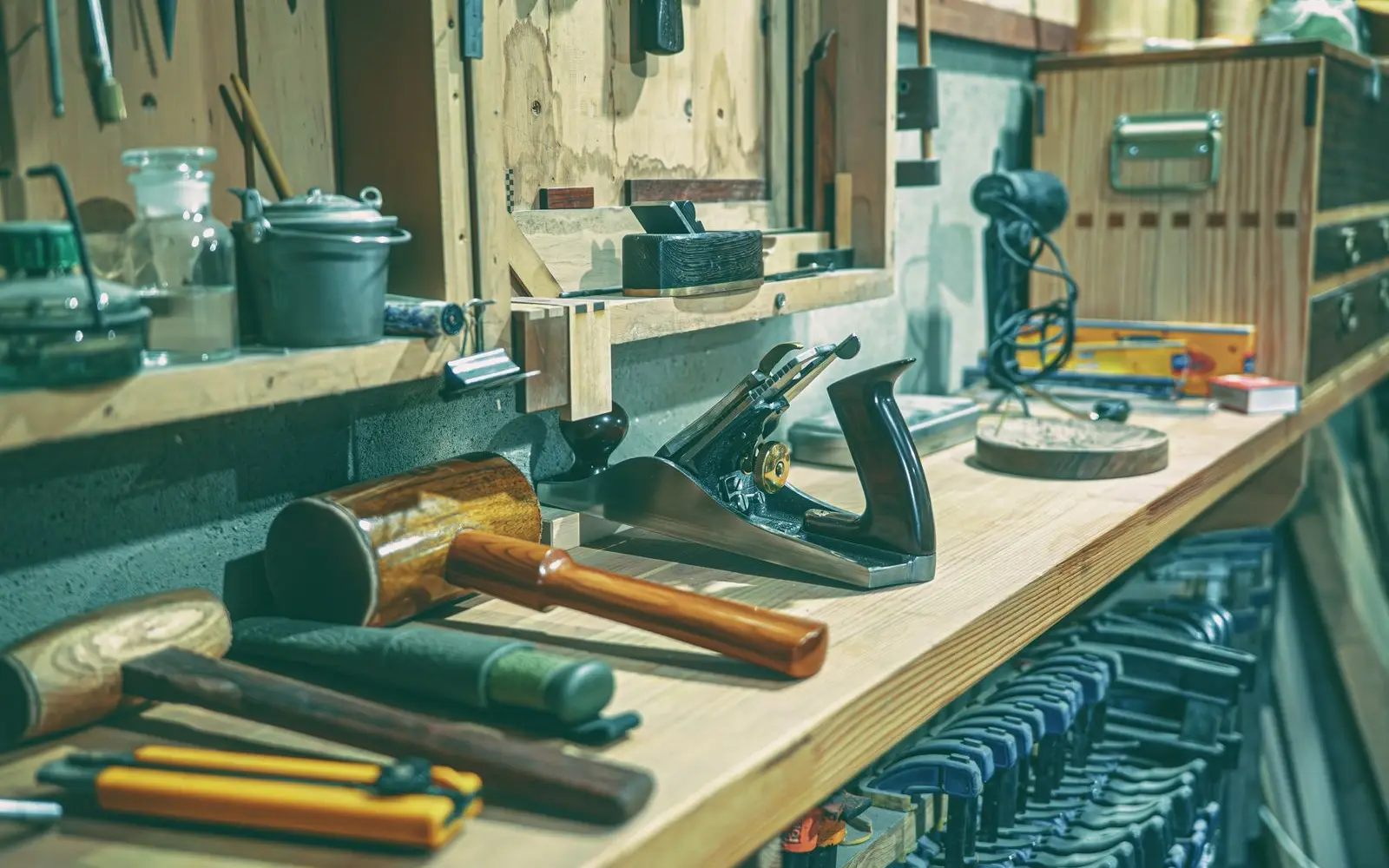
Basic tool kit
A few basic tools will save you a lot of frustration during the first few weeks. You don't need a workshop, you need about a dozen things and a place to keep them.
Know where the shutoffs are before you start
Find the water shutoff and breaker panel, and label the breakers. Most small repairs start with turning something off.
Every one of those places is dark, crawlspaces, the back of a utility closet, the cabinet under the kitchen sink, so a rechargeable work light or headlamp (affiliate link, opens Amazon in a new tab) earns its keep on day one and keeps both hands free. Once you find the shutoffs, an adjustable wrench and a pair of tongue-and-groove pliers (affiliate link, opens Amazon in a new tab) cover supply lines, hose bibs, and the p-trap under the sink, turn the water off before you loosen any of them.
Heads up: label your breakers from outside the panel, working one circuit at a time. Taking the panel cover off puts you inches from live wiring, and that one belongs to an electrician.
Buy the tool when the job shows up
Resist the 200-piece kit. Start with one of these three, then add the one specific tool each project actually needs. You'll end up with a better set for less money.
If you own nothing at all, a basic homeowner tool kit (affiliate link, opens Amazon in a new tab) , hammer, screwdrivers, pliers, tape measure, utility knife, small wrench set, one case, covers the first six months honestly. The single biggest upgrade after that is a cordless drill/driver kit (affiliate link, opens Amazon in a new tab), because shelves, blinds, flat-pack furniture, and every screw in the house get faster. Only if you're planning real projects is a drill and impact driver combo kit (affiliate link, opens Amazon in a new tab) worth the jump, the impact driver handles deck screws and lag bolts a drill will stall on. If you're not doing that kind of work, skip it and keep the money.
Measuring, hanging, and leveling
Almost every first-year project is really one of these three jobs, will it fit, where's the stud, and is it straight.
A 25-foot tape measure (affiliate link, opens Amazon in a new tab) answers "will the couch fit" before the delivery truck does. Anything heavier than a picture frame needs to land in framing, so use a stud finder that also flags live wiring (affiliate link, opens Amazon in a new tab) and check before you drill, plumbing and electrical run through those same bays. And a 4-foot level (affiliate link, opens Amazon in a new tab) is the difference between a shelf you stop noticing and one that bothers you for years.
Something to clean up the mess
Every project ends with sawdust, drywall grit, or water on the floor. A shop vacuum doubles as your cleaning workhorse.
A wet/dry shop vacuum (affiliate link, opens Amazon in a new tab) handles drywall dust, sawdust, and standing water that would wreck a household vacuum. If you already picked one up for the move-in deep clean, you're covered, don't buy a second one.